A chemical manufacturing company has been fined £3.8 million following two serious workplace incidents that resulted in life-changing injuries to employees.
Industrial Chemicals Ltd (ICL), based in Essex, was prosecuted by the Health and Safety Executive after workers at two separate sites were exposed to sodium hydroxide (caustic soda), a highly corrosive chemical.
Serious Injuries Could Have Been Prevented
In one of the incidents, an employee suffered injuries so severe that his leg had to be amputated below the knee. In a separate case, another worker sustained burns requiring skin grafts.
Investigations found consistent failures across both sites, particularly in how risks associated with hazardous substances were assessed and controlled.
The West Thurrock Incident (2019)
The most serious case occurred on 6 December 2019 at ICL’s West Thurrock site.
Michael Bartholomew, a chemical loader at the time, stepped into a puddle believed to contain caustic soda. The safety boots he had been issued were in poor condition and had not been properly tested to the required standards.
As a result, he suffered severe chemical burns that led to the amputation of his lower leg. He has since been unable to return to work.
The investigation revealed:
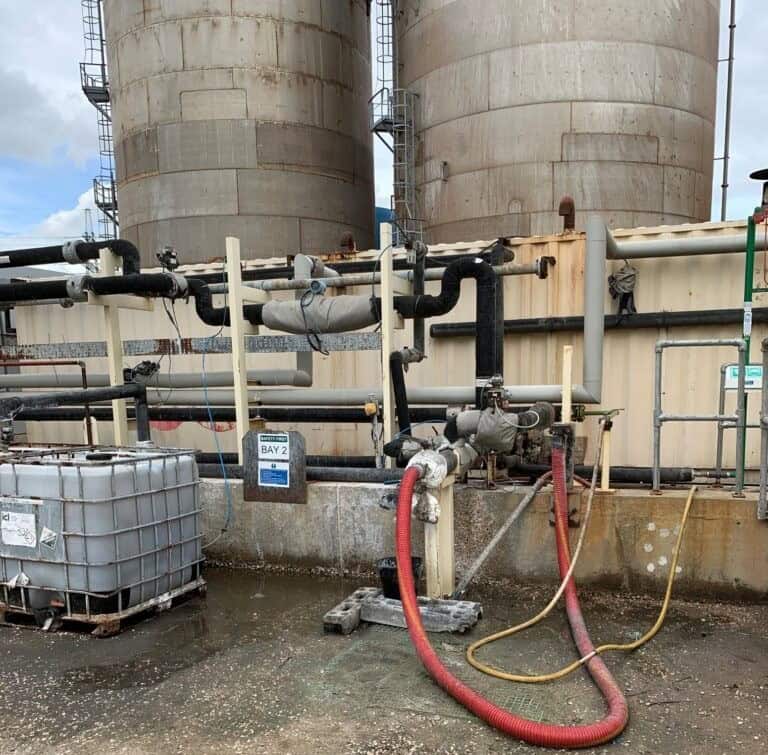
- Multiple leaks from pipework, valves, and hoses
- Poor inspection and maintenance systems
- Inadequate spill control measures
- Unsafe ground conditions allowing hazardous puddles to form
- No clearly defined safe walkways
In his victim statement, Mr Bartholomew described the devastating impact, stating his working life was “game over” and that he had lost both independence and the ability to support his family.
The Titan Works Incident (2022)
A second incident took place on 30 August 2022 at the company’s Titan Works site in Grays.
An employee suffered burns to his foot while manually transferring 50% caustic soda into containers. The injuries required skin grafts, although the worker has since returned to work.
The investigation found:
- No suitable risk assessment
- No safe system of work for the task
- A process that could have been fully automated
Following the incident, the company removed smaller containers and switched to pre-mixed deliveries, eliminating the need for manual handling.
Regulatory Outcome
ICL pleaded guilty to two breaches of the Control of Substances Hazardous to Health Regulations 2002.
The company was fined £3.8 million and ordered to pay £124,748 in costs at Southwark Crown Court on 21 April 2026.
An HSE inspector stated that the company had “manifestly failed” to implement adequate safety controls, despite working with a highly dangerous substance.
Key Safety Takeaways
Sodium hydroxide and other chemicals, such as sulfuric acid, in rechargeable batteries are widely used in manufacturing but pose significant risks, including severe burns and deep tissue damage.
By law, employers must:
- Eliminate exposure where possible (e.g. automation)
- Implement robust systems of work
- Maintain equipment and prevent leaks
- Control spills effectively
- Use PPE only as a last line of defence
Remember, a bit of training and proper PPE will cost a lot less than injuries, court cases or fines.
The Bottom Line
These incidents highlight a clear pattern of preventable failures. With proper planning, maintenance, and safer systems of work, both injuries could have been avoided.